
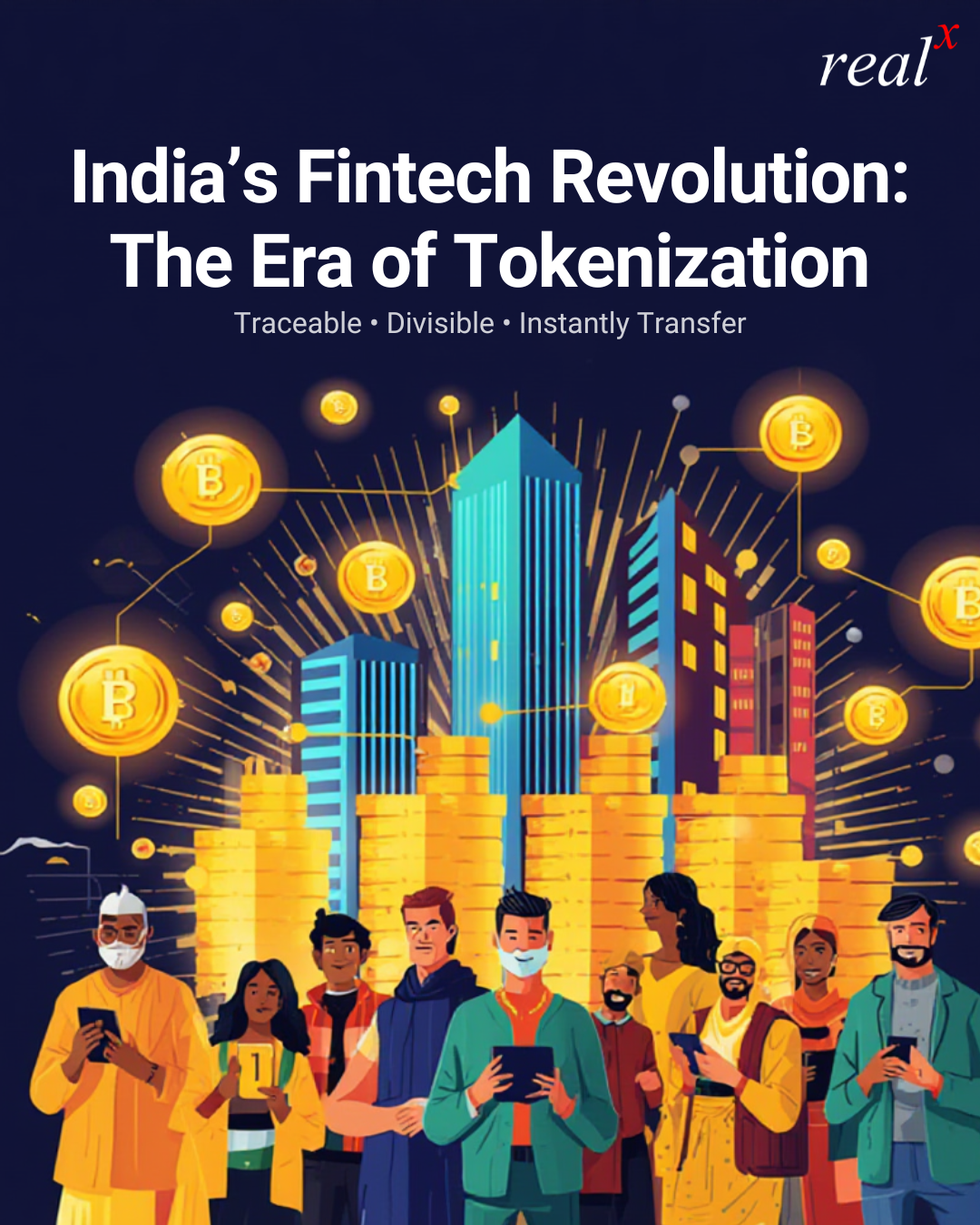
Introduction: The Ownership Revolution Has Begun
India’s fintech journey has already rewritten global playbooks. UPI turned every smartphone into a bank branch. Now, another revolution is unfolding—asset tokenization, a model that is fundamentally redefining how Indians own, trade, and invest in real-world assets like real estate, gold, bonds, and commodities.
Instead of large capital requirements, paperwork-heavy transfers, and opaque intermediaries, tokenization introduces a system where assets become digitally represented, divisible, traceable, and instantly transferable through blockchain technology. This is not just a technological upgrade — it is a structural transformation of wealth access and ownership democracy.
As someone who has spent over two decades shaping financial systems, I can state with confidence: tokenization will do for ownership what UPI did for payments.
What Is Asset Tokenization in the Indian Fintech Context?
Asset tokenization is the process of converting ownership rights of real-world assets into blockchain-based digital tokens. Each token represents a fraction of a physical asset, enabling partial ownership and seamless trading.
Key Characteristics of Tokenized Assets
- Fractional Ownership
- Blockchain-based Verification
- Smart Contract Automation
- Near-Instant Settlement
- Tamper-Proof Records
In India, regulatory pilots under RBI and SEBI are laying the framework through:
- Central Bank Digital Currency (CBDC) experiments
- Controlled tokenization sandboxes
- Digital securities infrastructure
This controlled innovation approach ensures market stability while accelerating adoption.
How Tokenization Is Transforming Real Estate Investment in India
Real estate has long been India’s most sought-after asset class, yet it has remained inaccessible for 90% of retail investors due to high entry costs and complex procedures.
Tokenization Changes This Equation:
- A ₹1 crore property can be split into 10,000 tokens of ₹1,000 each
- Investors buy, trade, or exit anytime
- Ownership is legally recognized and blockchain recorded
- Rental yields distributed automatically via smart contracts
Real-World Example
A Grade-A commercial property in Mumbai could be fractionalized for retail investors across Tier 2 and Tier 3 cities. Investors receive:
- Monthly rental yields
- Asset appreciation benefits
- Real-time ownership tracking
This democratizes real estate investment without requiring massive capital.
Gold Tokenization: Making India’s Favorite Asset Liquid & Digital
India holds over 25,000 tonnes of household gold. Tokenization converts this dormant wealth into productive financial instruments.
Benefits of Gold Tokenization
- Real-time valuation
- Zero storage risk
- Instant liquidity
- Transparent audit trails
For example, 1 gram of physical gold can be converted into tradable tokens authenticated by vault-backed certification systems.
The Role of Blockchain in Secure Asset Tokenization
Tokenization relies on:
- Distributed Ledger Technology (DLT)
- Smart Contracts
- Immutable Record Systems
Security Advantages
- Fraud prevention
- Ownership transparency
- No double-spending
- Automated compliance
Blockchain ensures trust without dependency on central intermediaries, improving efficiency and reducing systemic risk.
Impact on Financial Inclusion & Wealth Distribution
Tokenization aligns perfectly with India’s digital inclusion goals.
How It Empowers the Masses
- Enables micro-investments
- Reduces geographical limitations
- Brings asset ownership to rural areas
- Expands wealth creation beyond elite circles
This directly supports India’s vision of inclusive economic progress.
Regulatory Framework & RBI’s Strategic Approach
India’s regulators are introducing tokenization through phased pilots, prioritizing:
- Risk containment
- Investor protection
- Legal validity
- Asset-backed compliance
Key developments include:
- RBI’s Digital Rupee
- SEBI’s consultation on digital securities
- State-backed asset tokenization pilots
This regulatory clarity strengthens trust and market confidence.
Benefits for Investors, Developers & Institutions
For Individual Investors
- Lower entry barriers
- Portfolio diversification
- Transparent asset performance
For Developers
- Faster fundraising
- Broader investor reach
- Reduced dependency on bank loans
For Financial Institutions
- Efficient asset securitization
- Transparent audits
- Reduced operational costs
Actionable Insights: How Businesses Can Prepare
- Adopt blockchain-integrated platforms
- Partner with regulated tokenization service providers
- Align with SEBI and RBI compliance requirements
- Educate investors on digital asset literacy
- Create liquidity marketplaces
Early movers will command the next wave of fintech leadership.
Future of Tokenization in India’s Fintech Ecosystem
By 2030, asset tokenization in India is projected to exceed $1 trillion in market value. The integration of tokenization with digital identity (Aadhaar) and payment infrastructure (UPI) will create a seamless asset economy.
Ownership will no longer be a privilege — it will be a right enabled by technology.
Frequently Asked Questions (FAQ)
What is asset tokenization in India?
Asset tokenization is the process of converting physical asset ownership into blockchain-based digital tokens for secure, fractional trading.
Is asset tokenization legal in India?
Yes, under regulated frameworks and RBI/SEBI pilot programs, tokenization is being legally integrated into financial frameworks.
How can I invest in tokenized real estate?
Through registered platforms that offer fractional property ownership using blockchain-backed tokens.
Is tokenization safe for retail investors?
Yes, when done via regulated and compliant platforms with transparent audit systems.
What assets can be tokenized?
- Real estate
- Gold
- Bonds
- Private equity
- Commodities
Conclusion: A Defining Moment for India’s Financial Future
Tokenization marks the beginning of a new asset economy where ownership is democratic, transparent, and efficient. By lowering barriers and introducing programmable trust, India is positioning itself as a global fintech pioneer once again.
Whether you are an investor, developer, policymaker, or fintech entrepreneur, the message is clear: the future of wealth lies in tokenized ownership.
Now is the time to understand, adapt, and lead this transformation.

Hi, I’m Saurabh – Marketing Manager at RealX and the person behind the stories, ideas, and insights you read on Wassup. My job allows me to dive deep into consumer behaviour, brand-building, and the fast-changing world of digital innovation, and Wassup is where I share those learnings in a simple, approachable way.
Thanks for stopping by – hope Wassup adds a little clarity, curiosity, and value to your day.
I wish to show my affection for your kind-heartedness in support of men and women that have the need for help on this important subject. Your real commitment to passing the message across became definitely effective and has surely enabled guys like me to attain their pursuits. Your new warm and helpful guidelines signifies a lot to me and a whole lot more to my office colleagues. Best wishes; from each one of us.