
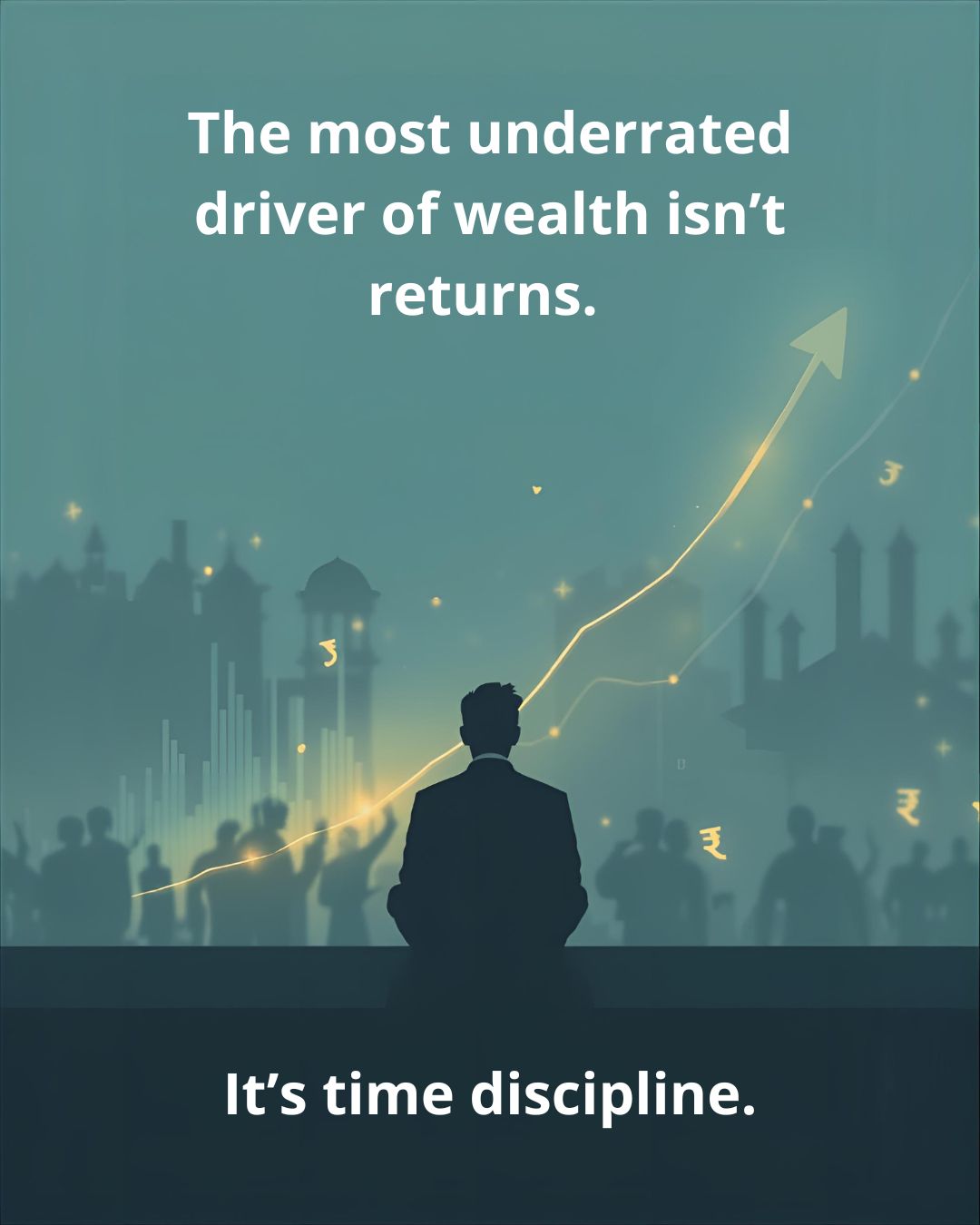
Historically, Indian markets have consistently scaled new highs. A more inclusive and mature market ecosystem has laid a strong foundation for growth, innovation, and expanding participation. As the market develops, headline returns continue to rise.
Yet the real gap lies not in market returns, but in realised returns. Despite investing in a rapidly growing market, most retail investors end up earning far less than what the market delivers.
The reason is behavioural. Herd mentality pushes investors into return-chasing (frequent entry and exit, constant switching, and unnecessary action. But true financial gains are not driven by chasing the highest returns, they are built through the power of compounding.
Compounding, however, demands time, discipline, and most importantly – lock-in. It thrives on staying invested, not on active churning. Markets reward patience far more than precision.

Most modern-day investors spend hours studying and chasing assets with higher returns. Mostly end up thinking only about assets like equities, Indices, unlisted companies or even cryptocurrency. But despite the heavy analysis, constant churning and swing trading, the portfolio is often outperformed by the real-world assets like Gold and Real estate.
Previous generations in India built significant wealth through assets like gold and real estate instruments that, on paper, delivered modest returns compared to equities. Yet it was the unrealised gains, which patiently allowed to compound and outshine the temporary return.
The reason wasn’t superior analysis.
It was structure.
Gold stayed locked away for decades.
Real estate came with paperwork, taxes and friction.
These frictions acted as an emotional shield. Assets that were hard to sell forced people to hold through cycles. That single constraint eliminated panic selling, trend-chasing and over-trading – the very behaviour that destroys compounding.
People nowadays look for Liquidity, the characteristic that is often celebrated for flexibility and effortless transactions. Investors act more often – reacting to noise, volatility and emotion. Each action feels small, but together they affect realized returns
The phrase often used – “Old is gold”. In our context, the old-school investment strategies drive benefits or what we call nowadays “High and stable Returns”.
What’s interesting is that this behavioural advantage is no longer limited to the past.
Today, even traditionally illiquid assets like land and real estate or residential properties in major Indian cities have generated roughly 10 – 14% annualised returns when rental yield and appreciation are combined. But the real advantage was behavioural. High transaction costs, regulatory friction and effort ensured holding periods of 15 – 30 years. Investors were forced to ride through multiple economic cycles, letting time, not timing, do the work.
With new technology layered onto this old investing discipline, land and real estate can now be accessed digitally, in smaller and more affordable units. This lowers entry barriers without diluting the core behaviour that made these assets effective wealth builders.
Instead of committing large amounts of capital to a single property, investors can spread exposure across multiple assets, locations and cash-flow profiles. Crucially, while access has become easier, the investment thesis remains unchanged: long holding periods, limited churn and patience-driven compounding.
The lesson is simple:
Wealth isn’t just about what you invest in.
It’s about what prevents you from selling too early.
Sometimes, friction is the feature.
Inspired by a LinkedIn article by Saket Mehrotra

With a strong interest in markets and emerging financial infrastructure, I’m driven by how thoughtful design and disciplined decision-making can create lasting value. My work centres on creating robust financial frameworks that balance innovation with stability and long-term impact. I believe the best outcomes come from patience, clarity and long-term thinking.
Good blog! I really love how it is easy on my eyes and the data are well written. I’m wondering how I might be notified whenever a new post has been made. I’ve subscribed to your RSS feed which must do the trick! Have a great day!