
“The beginning of the tokenization of all assets.”
— Larry Fink, CEO of BlackRock
“Tokenization has the potential to transform financial markets.”
— Franklin Templeton leadership
“We’re building the infrastructure for digital assets at scale.”
— Fidelity Investments
This, is what the market is talking about right now.
Not in theory.
Not in pilots.
But in real capital, real products and real intent.
Some of the largest asset managers in the world are aligning on one idea —
that the way financial assets exist today is about to change.
So what exactly is changing?
At its core, tokenization is simple.
It’s about taking a financial asset — like a treasury bill, a fund, or private credit —
and representing ownership of it as a digital token on blockchain.
But that small shift changes a lot.
Because instead of relying on multiple intermediaries and legacy systems,
the asset itself becomes:
- Easier to transfer
- Easier to track
- Easier to divide
Why is this suddenly important?
Because traditional finance still has friction built into it.
Settlements take time.
Access is often restricted.
Systems don’t always integrate smoothly across institutions.
Tokenization directly addresses this:
- Near-instant settlement instead of days
- Fractional ownership, lowering entry barriers
- Programmability, allowing assets to interact with smart contracts
- Global accessibility, beyond local markets
It’s not just an upgrade — it’s a rebuild of the underlying rails.
And this isn’t early anymore
The numbers are starting to reflect real momentum.
- Tokenized assets have crossed $30B+ globally
- Growing at over 250% year-on-year
- Institutional products already managing billions in AUM
More importantly, institutions are starting with low-risk, high-trust assets —
like treasury-backed funds and money market instruments.
That signals something critical:
This is being built for scale, not speculation.
What happens next?
If this continues, tokenized assets won’t remain a niche category.
They could become the default format of ownership.
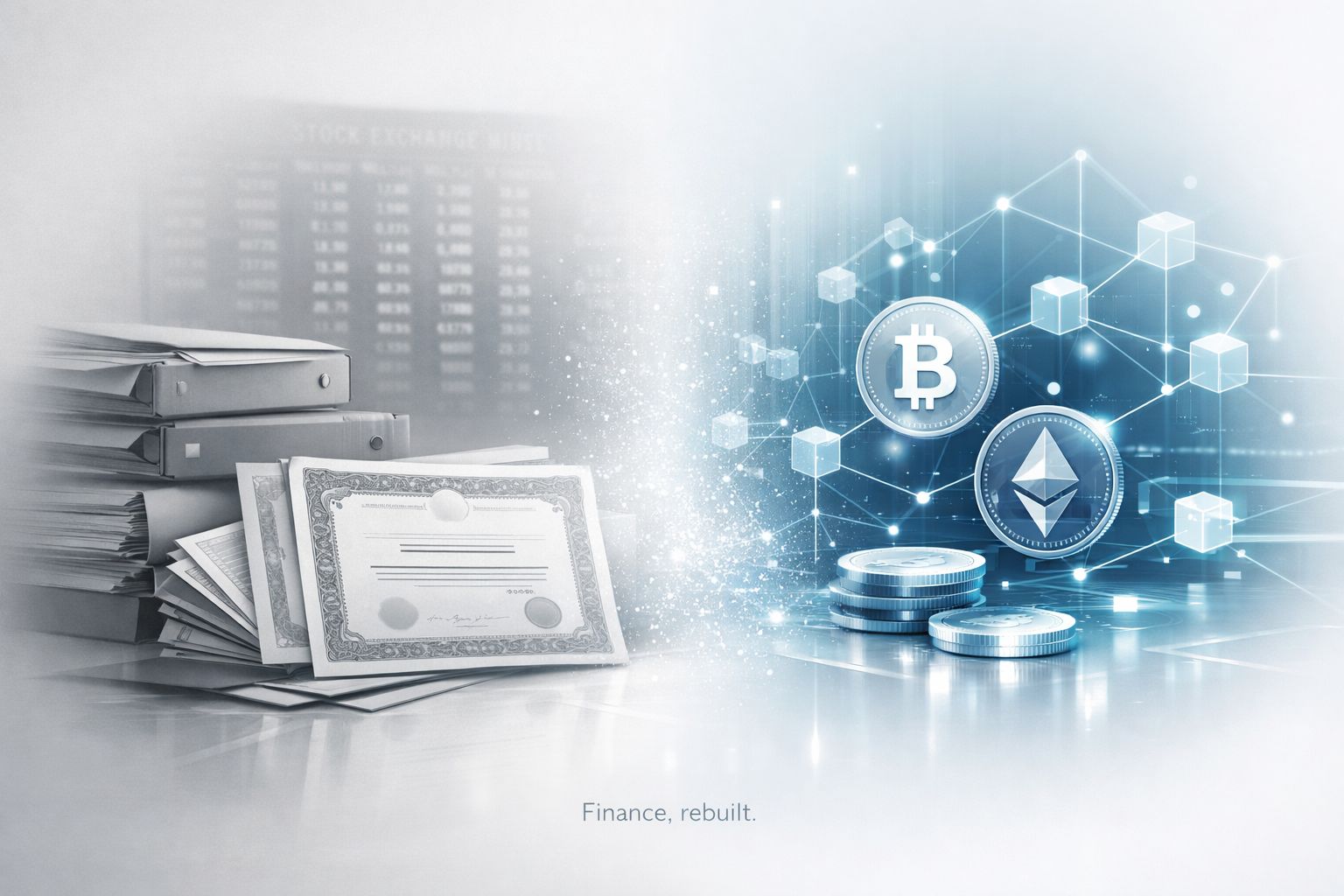
Just like markets moved from paper certificates to digital records,
the next shift could be from digital records to on-chain assets.
Estimates already point toward a multi-trillion dollar market over the next decade.
The bigger takeaway
When firms like BlackRock, Fidelity Investments and Franklin Templeton start building in the same direction,
it’s usually not a passing trend.
It’s a signal.
A signal that finance is slowly moving toward:
- More efficient systems
- More accessible assets
- And more digital-native infrastructure
The question isn’t whether tokenization will play a role.
It’s how deeply it will reshape the system from here.

With a strong interest in markets and emerging financial infrastructure, I’m driven by how thoughtful design and disciplined decision-making can create lasting value. My work centres on creating robust financial frameworks that balance innovation with stability and long-term impact. I believe the best outcomes come from patience, clarity and long-term thinking.
Connect: radhika@realx.in