
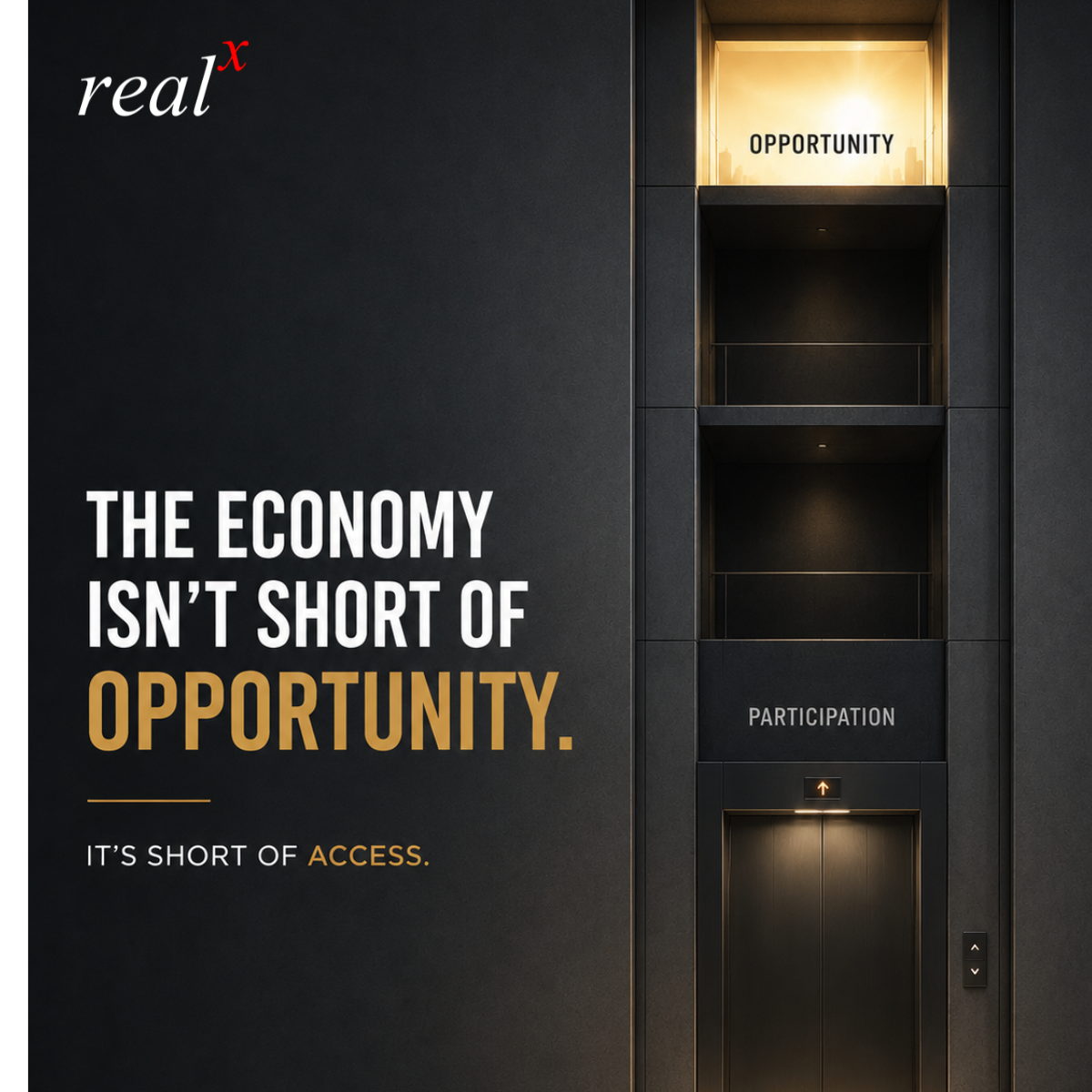
For decades, the global playbook for economic success has relied on a single, unwavering metric: output. If the numbers were moving up and to the right, the economy was working. We anchored our collective progress to a familiar set of indicators:
- Gross Domestic Product (GDP) growth
- Market capitalization
- Corporate profits
- Productivity gains
The underlying assumption was beautifully simple: More output equals more prosperity. It operates on a rising-tide theory—build a bigger engine, generate more power, and the benefits will naturally distribute themselves.
Yet, we are living through a strange economic paradox. By almost every traditional metric, our economies continue to expand, record corporate profits are broken, and technological productivity is at an all-time high. Yet, a vast and growing number of people feel entirely disconnected from this growth. They look at the soaring charts and feel like spectators rather than stakeholders.
Why is this happening? Because we have conflated two fundamentally different concepts: creating value and participating in value creation are not the same thing.
The New Constraint Is Not Production
Because we spent centuries solving the production problem, we are still treating it as our primary constraint. But it isn’t.
Today, the bottleneck in our economy has shifted. Many sectors are swimming in abundant capital, advanced technology, and raw productive capacity. The defining challenge of our era is no longer how much we can build, but rather: Who can access the opportunities being created?
This friction is visible across the most critical pillars of modern wealth creation:
- Housing: Real estate has shifted from a foundational community asset to a highly financialized vehicle, pricing out the very people who live and work in those communities.
- Private Markets & Venture Capital: The vast majority of high-growth value is now captured early in private markets, accessible almost exclusively to institutional funds and accredited, ultra-wealthy investors long before the public can touch it.
- High-Growth Investments: As technology scales businesses faster with less capital, the equity and subsequent wealth creation remain concentrated in fewer, highly restricted hands.
The economy is functioning exactly as designed—it is producing immense value. But because the entry points to that value have narrowed, participation remains deeply uneven.
History Shows, Participation Drives Expansion
When we look back at the moments of true, transformative economic leaps, they rarely happened just because we invented a better product. They happened because we let more people into the game. The biggest economic expansions occur when barriers to participation fall.
Consider the stock market. It didn’t become the massive engine of wealth it is today simply because corporations changed; it grew exponentially because structural and technological shifts allowed retail investors, 401(k) holders, and everyday citizens to participate in corporate equities.
Similarly, banking systems expanded and stabilized when credit, savings, and financial tools moved away from elite merchants and became accessible to the broader public. In the digital age, the internet didn’t just create value because of its code; it created trillions of dollars in value because billions of people could suddenly create, communicate, and transact within it.
Participation as an Economic Multiplier
This brings us to a critical intellectual pivot. For too long, expanding economic access has been framed through the lens of charity or social welfare – a concession made by the successful to the left-behind.
This view is economically backward. Participation is not a social outcome; it is an economic input.
Broad Participation ➔ Capital Formation ➔ Deeper Markets ➔ Accelerated Innovation ➔ Expanded Consumption
When you shift the framework to view participation as a foundational input, the mechanics of growth change entirely:
- Increased Capital Formation: When more individuals have the surplus to invest, localized and distributed capital pools grow.
- Deeper, More Resilient Markets: A market relying on a massive, diverse base of participants is far more stable than one relying on a few concentrated institutional players.
- Accelerated Innovation: Innovation thrives on cognitive diversity. When access to capital and tools is democratized, problem-solving happens in places a centralized boardroom would never look.
- Expanded Consumption & Wealth Broadening: True economic velocity happens when money moves through the hands of many, driving sustainable demand and building generational security.
A New Measure of Economic Success
It is time to change the question that guides our economic policy and corporate philosophy. Instead of asking: “How much value did we create this quarter?” the more vital question for long-term stability is: “How many people were able to participate in creating and benefiting from that value?”
Economies do not merely grow through the raw volume of production. They achieve durable, compounding strength when opportunity becomes structurally accessible to a larger share of society.
The defining economic challenge of the coming decades will not be figuring out how to increase output or maximize efficiency. We have proven we can do that. The challenge will be increasing participation. History suggests that the most prosperous eras are born not when the economy creates a few more billionaires, but when it creates millions of new participants.

With a strong interest in markets and emerging financial infrastructure, I’m driven by how thoughtful design and disciplined decision-making can create lasting value. My work centres on creating robust financial frameworks that balance innovation with stability and long-term impact. I believe the best outcomes come from patience, clarity and long-term thinking.
Connect: radhika@realx.in